The Rise of Autonomous AI Agents: How They’re Transforming Business Operations
Introduction
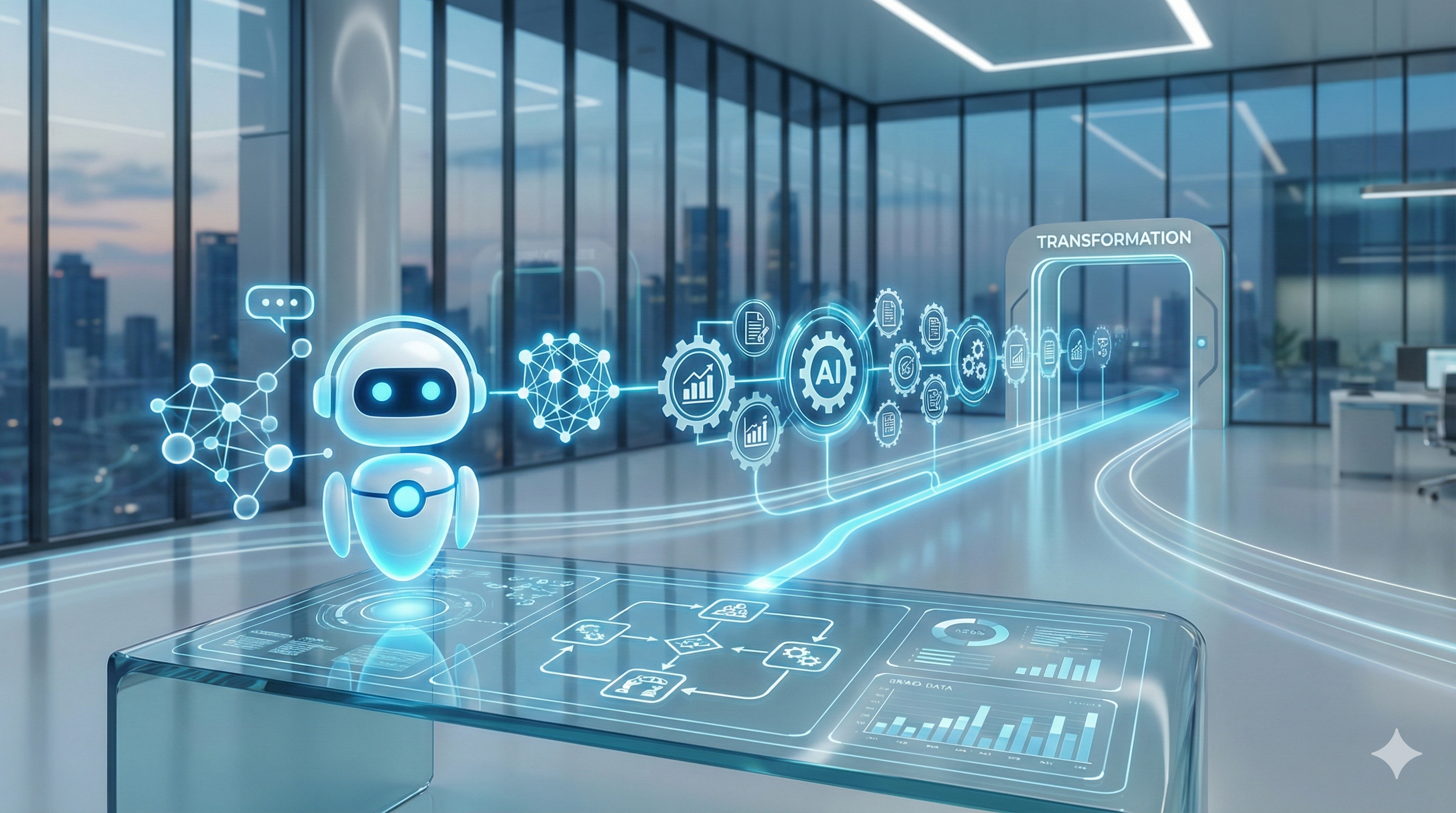
We are witnessing a paradigm shift in automation: moving from "tools we use" to "digital workers we collaborate with."
Autonomous AI Agents are moving beyond simple task automation to fully autonomous decision-making.
Unlike traditional scripts that follow a linear path, AI agents can perceive their environment, reason about the best course of action, and use tools to achieve complex goals with minimal human intervention.
The Architecture of Agency
What makes an agent "autonomous"? It starts with the architecture. Modern agents often utilize frameworks like ReAct (Reasoning + Acting), which allows the model to "think" before it "acts."
- Chain-of-Thought Reasoning: The agent breaks down a complex user request (e.g., "Plan a marketing campaign") into a sequence of logical steps.
- Tool Use (Function Calling): Agents are equipped with "tools"—APIs that allow them to interact with the outside world. This could be a CRM, a calendar, or a database.
- Memory: Agents maintain context over time, remembering past interactions and user preferences to inform future decisions.
Transforming Operations: Real-World Use Cases
Businesses are deploying agents across the enterprise to drive efficiency in ways that static automation never could:
- L1 Support Automation: Instead of just retrieving articles, an agent can authenticate a user, check their billing history, process a refund via the payment gateway, and update the ticket—all without human handoff.
- Supply Chain Management: Agents can monitor inventory levels in real-time. When a disruption is detected (e.g., a shipping delay), the agent can autonomously query alternative suppliers, compare prices, and place orders based on pre-approved budgets.
- Workflow Orchestration: Agents act as the "glue" between disparate legacy systems, translating data formats and managing complex, multi-step processes that span different departments.
Challenges and Risks
Despite their potential, autonomous agents introduce new risks that must be managed. Hallucinations remain a concern; an agent might confidently take an incorrect action based on flawed reasoning. There is also the risk of infinite loops, where an agent gets stuck trying to complete a task that is impossible, consuming vast amounts of computational resources.
To mitigate these, organizations are implementing "guardrails"—strict programmatic constraints that limit what an agent can and cannot do, ensuring they operate within safe boundaries.
The Future Workforce
The rise of agents doesn't mean the end of human work; it means the evolution of it. We are moving towards a hybrid workforce where humans and agents collaborate. Humans will shift from being "doers" to being "managers" of digital workers, defining goals, reviewing high-stakes decisions, and handling the creative and empathetic aspects of business that AI cannot replicate.
Conclusion
The rise of autonomous agents represents a new era of productivity. By augmenting human teams with digital workers that can reason and act, businesses can scale operations in ways previously impossible, freeing up humans to focus on strategy, creativity, and innovation.